RAK7285/RAK7285C Unboxing & Installation
Before physically mounting the gateway outdoors, it is recommended to complete the network and LoRaWAN® configuration steps described in the Quick Start Guide.
This ensures that once the gateway is powered on at the installation site, it can immediately join the network without requiring on-site configuration or physical access.
Prerequisites
Package Inclusion
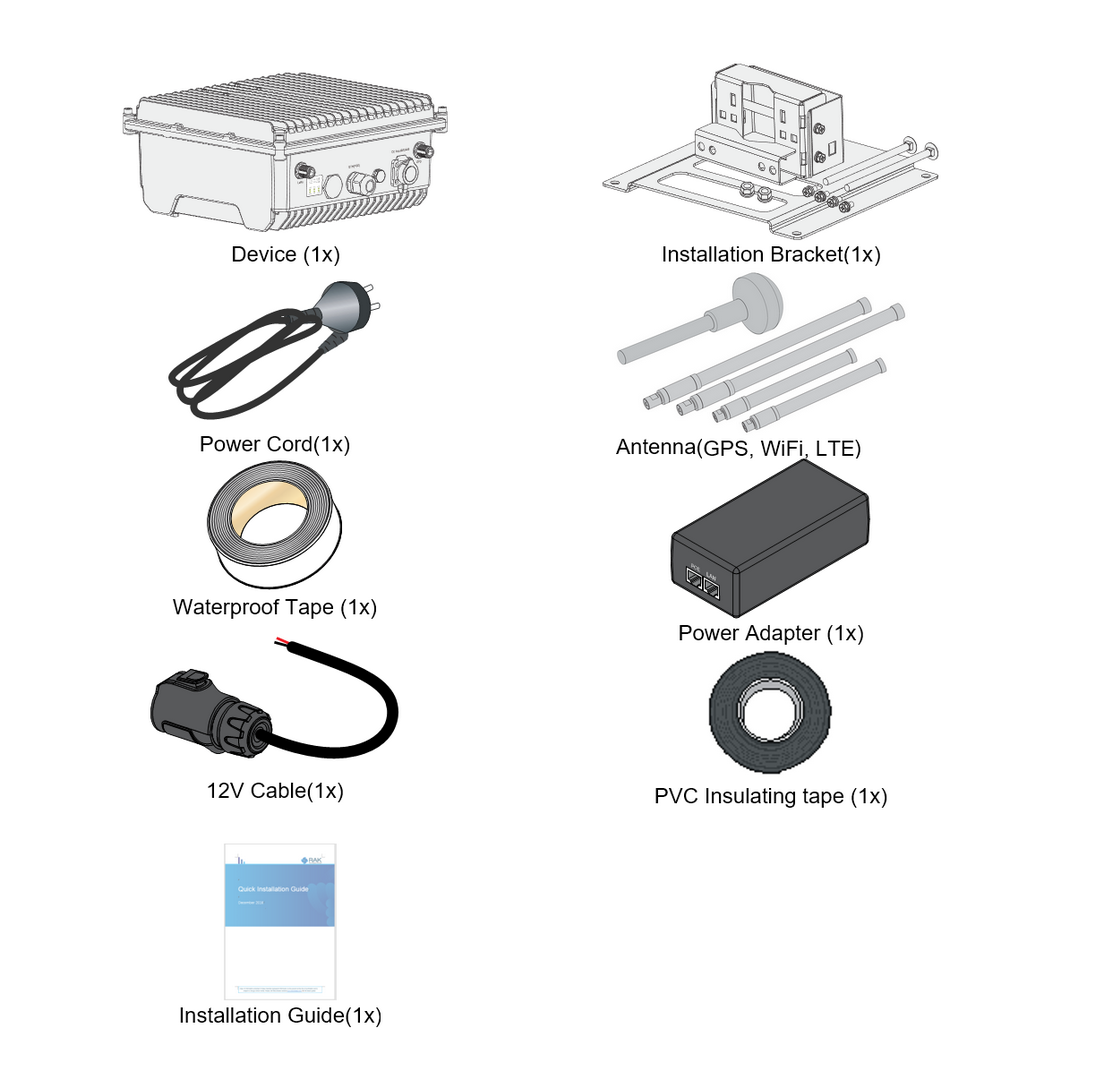 Figure 1: RAK7285/RAK7285C packing list
-
LoRa® antenna is not included and must be purchased separately.
-
LTE antennas are included only with cellular models (RAK7285C).
Additional Hardware Required
-
Ethernet Cable (RJ-45 Port) – Required for network setup
-
A Windows/MacOS/Linux Computer – For configuration via Web UI
-
LoRa® Antenna(s) – One or two antennas may be required, depending on your gateway model
-
NanoSIM Card (for LTE version) – Size: 12 x 9 x 0.67 mm
Installation
Insert SIM Card (For cellular models only — RAK7285C)
The SIM card slot of the cellular versions is not hot-swappable. Make sure the gateway is switched off before inserting or ejecting the SIM card.
- Start by unscrewing the cap of the NanoSIM interface on the gateway enclosure to expose the SIM card slot.
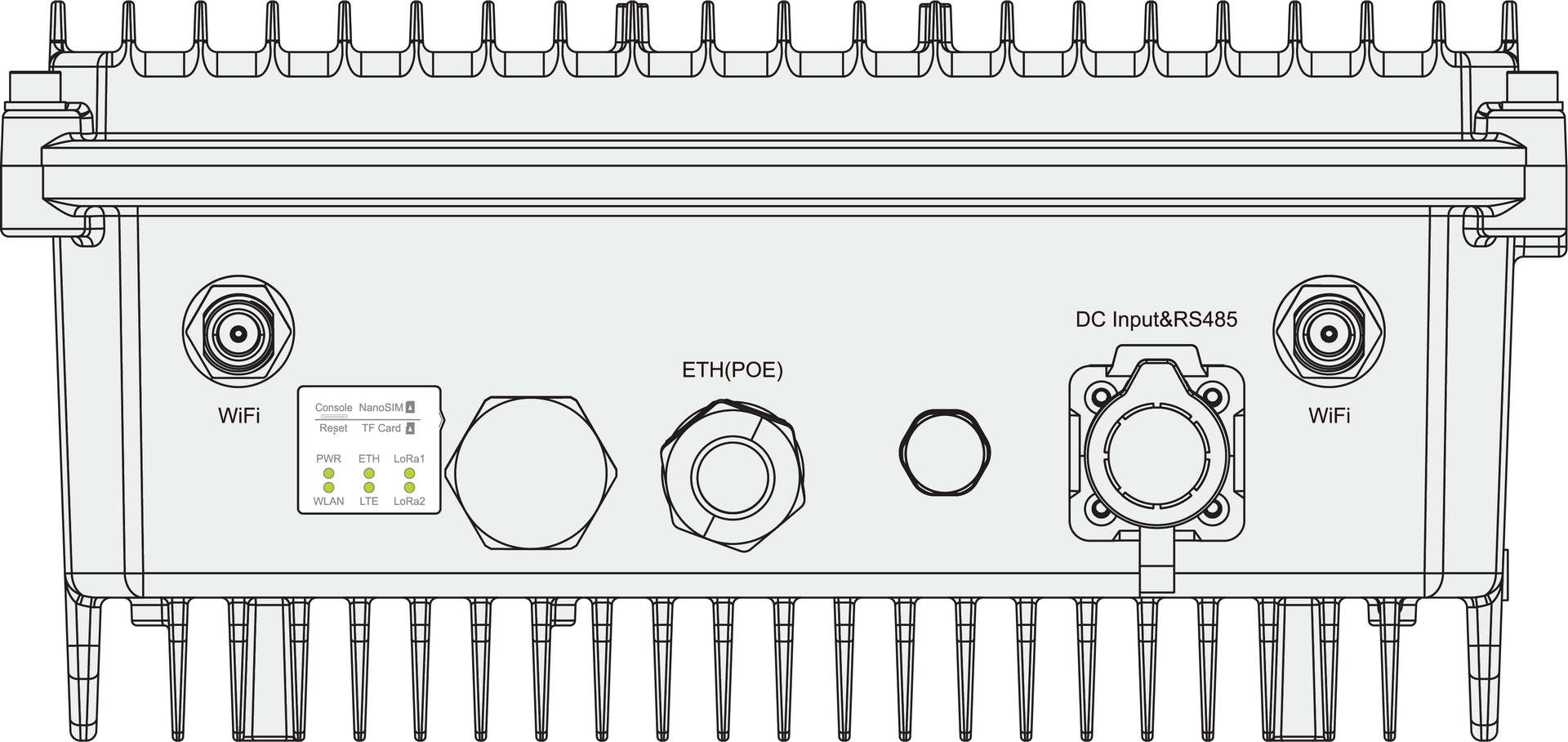 Figure 1: Unscrewing the cap of the NanoSIM interface
- Push the SIM card into the card slot according to the placement method marked on the interface.
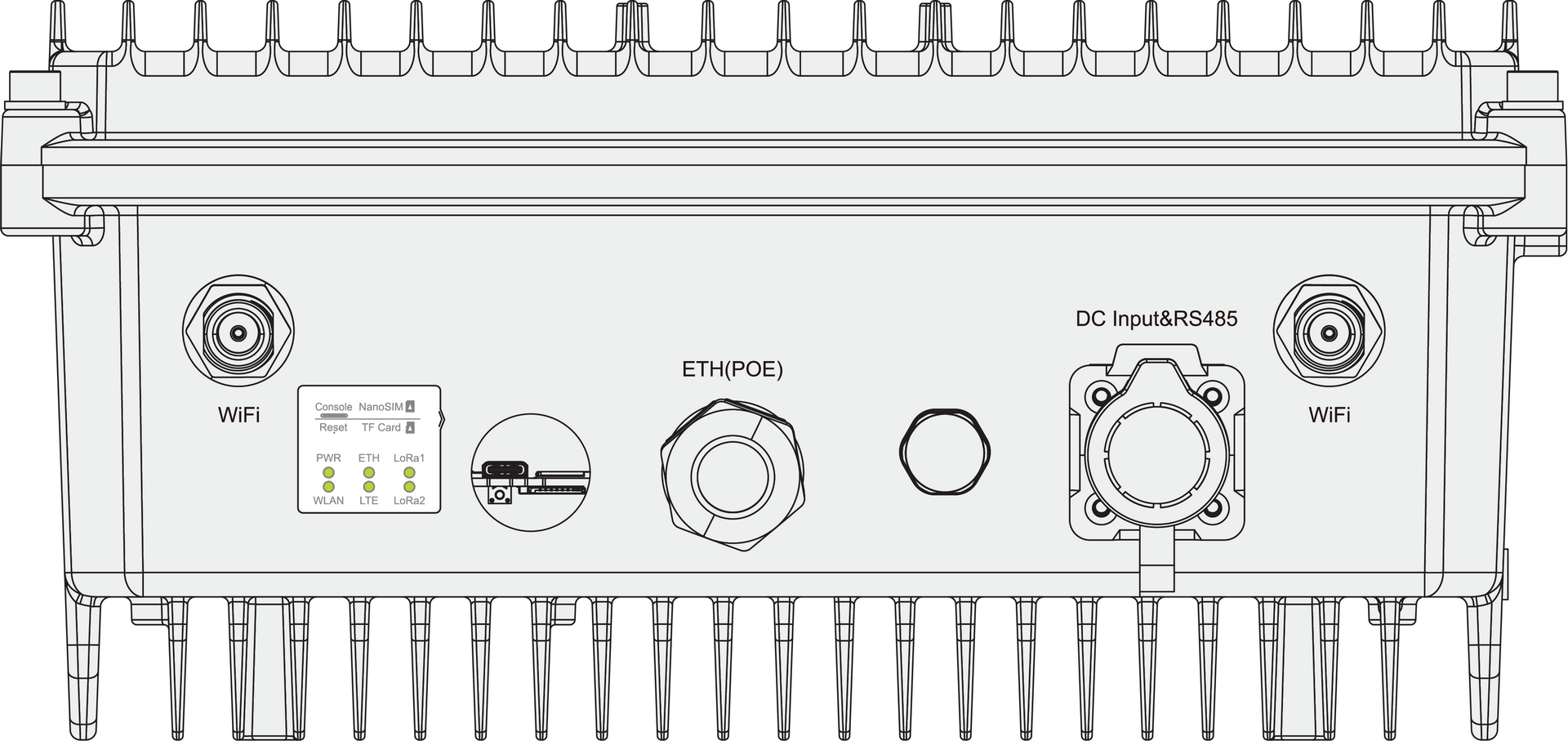 Figure 1: Inserting the NanoSIM card
- Once completed, screw back the metal cap. Make sure it is tightly screwed.
Mount the Gateway
- Attach the mount adapter included in the mounting kit on the bottom of the enclosure using four M6 x 12 mm screws.
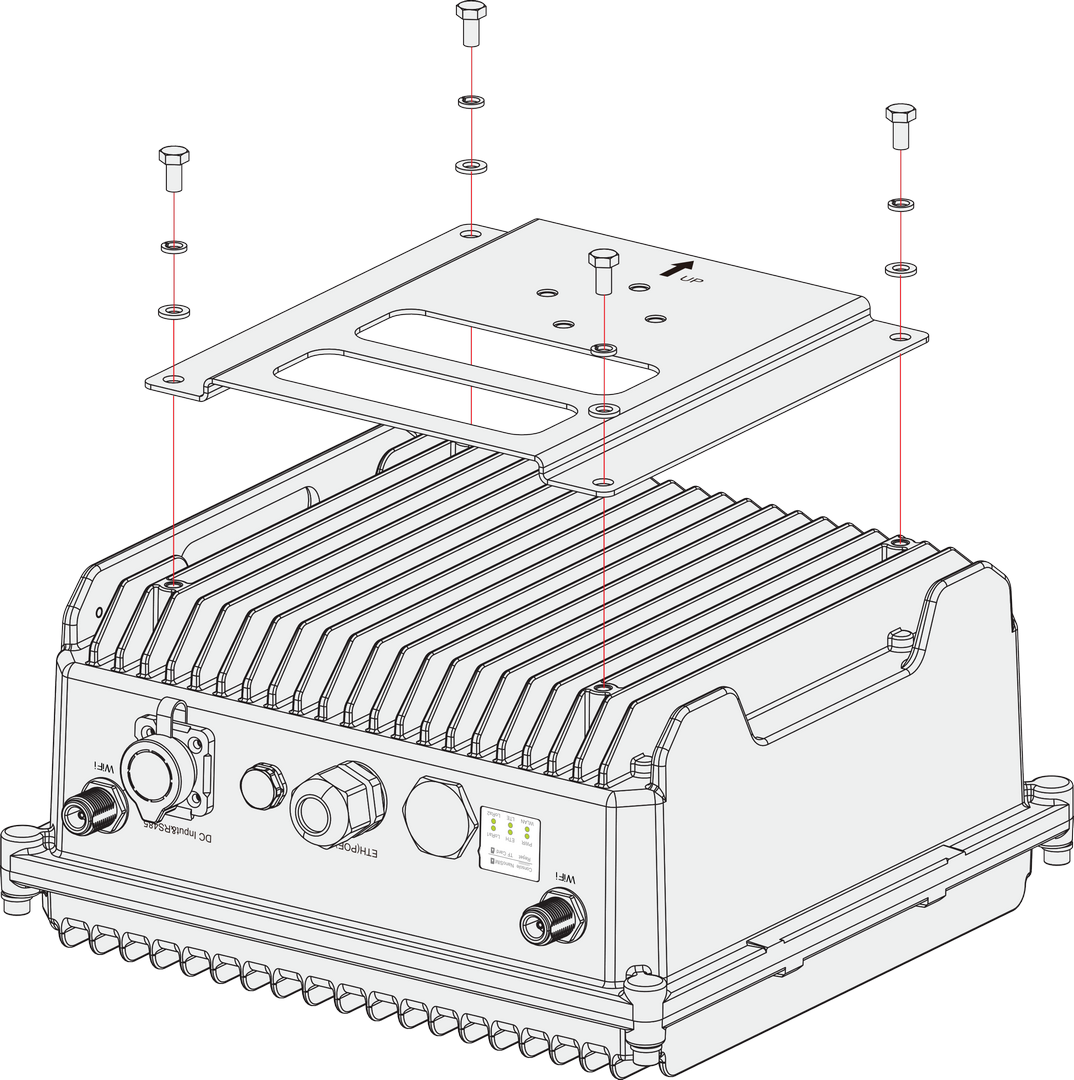 Figure 1: Attaching the mount adapter to the enclosure
- After attaching the mount adapter, fix the device bracket on it with four M6*12 screws.
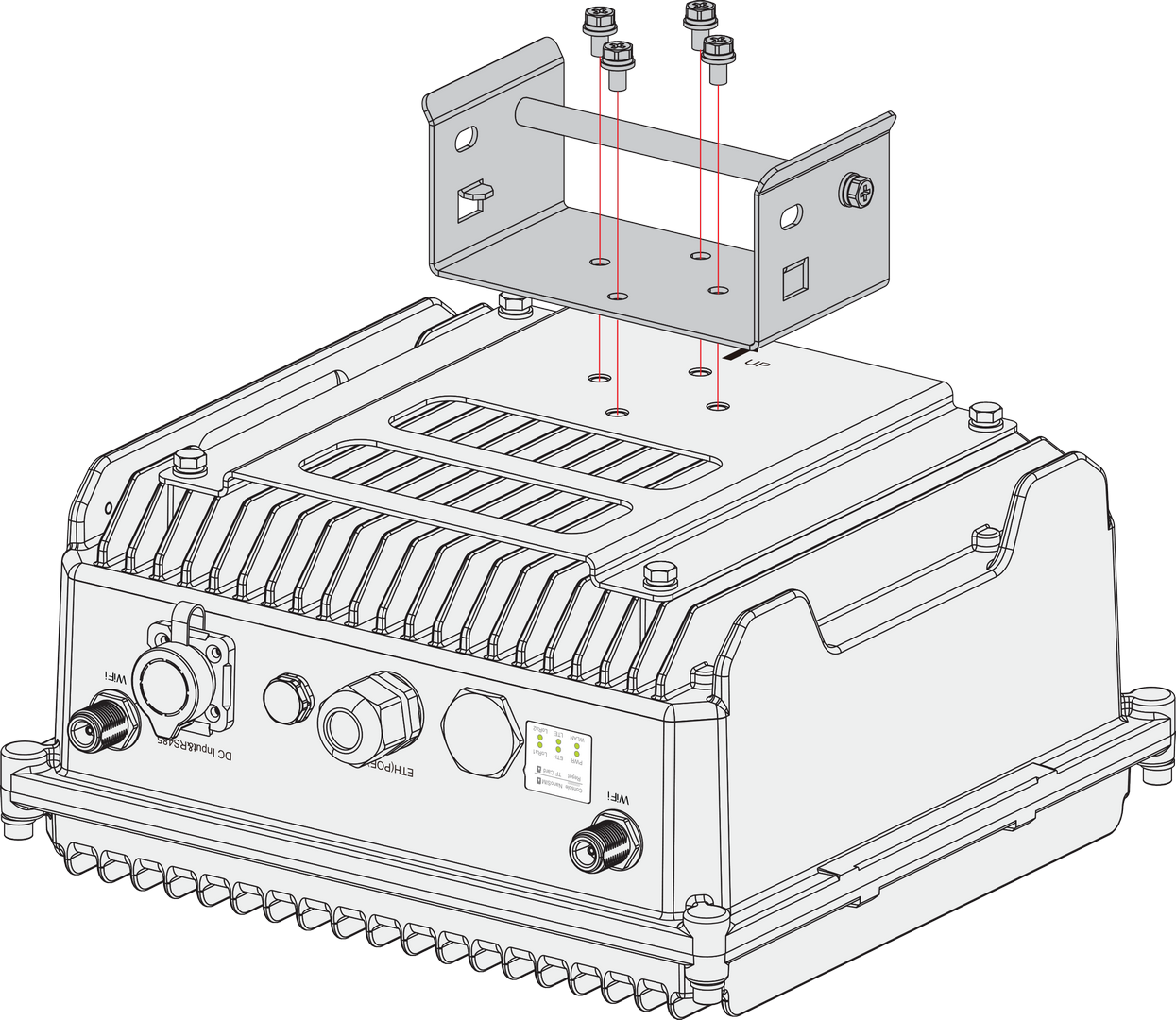 Figure 1: Mounting the device bracket to the enclosure
- Position and fasten the pole clamps together around the pole with bolts, washers, and nuts.
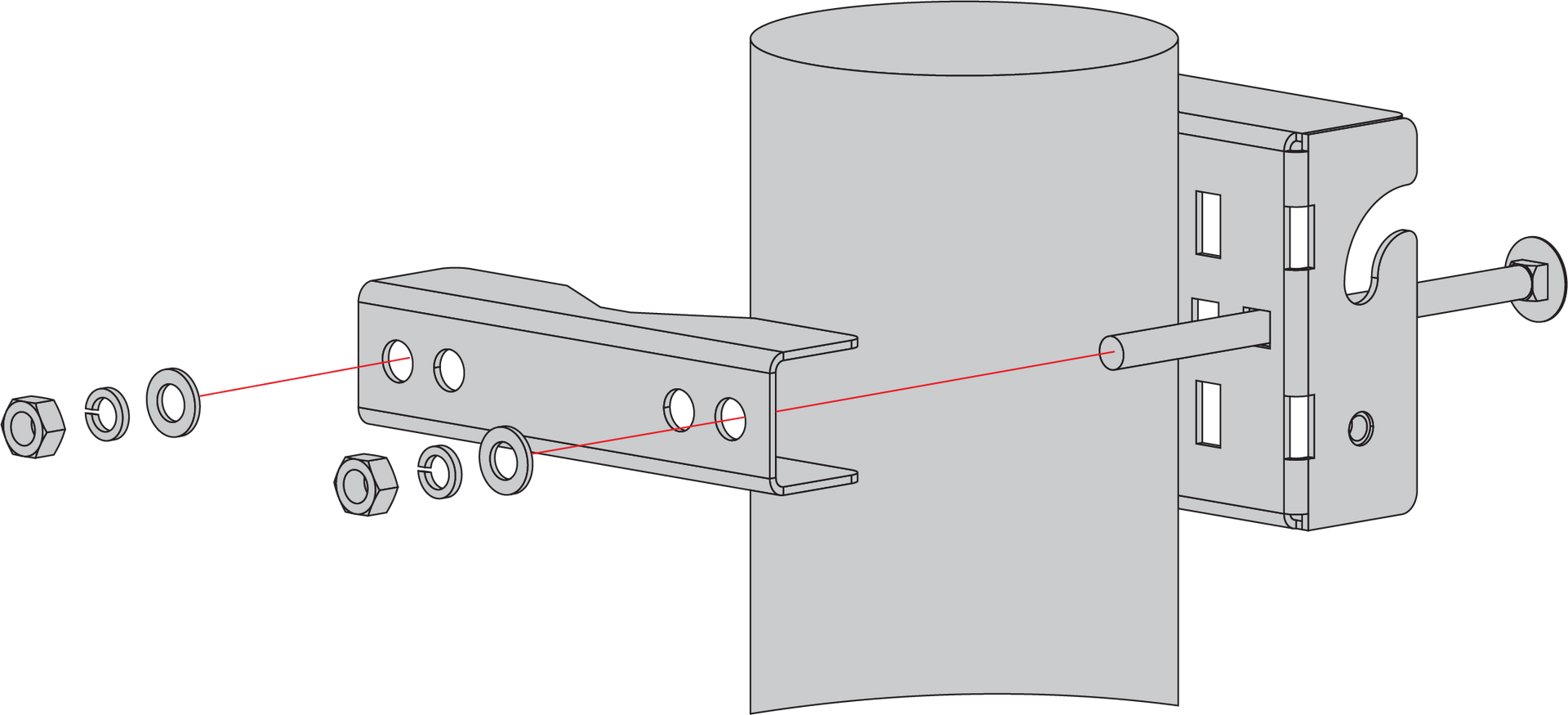 Figure 1: Mounting the clamps to a pole
The pole supported by the brackets has a diameter ranging from 50~100 mm. If the pole diameter exceeds 100 mm, you can use steel strips instead. The standard mounting kit does not include steel strips, they are sold separately.
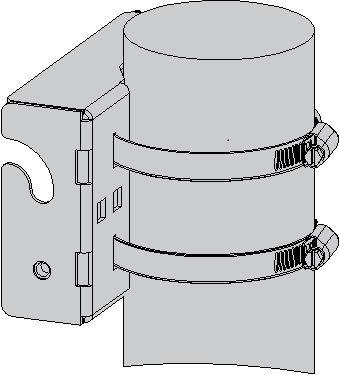 Figure 1: Mounting using steel strips
- Hang up the enclosure and affix it with two M6*12 screws.
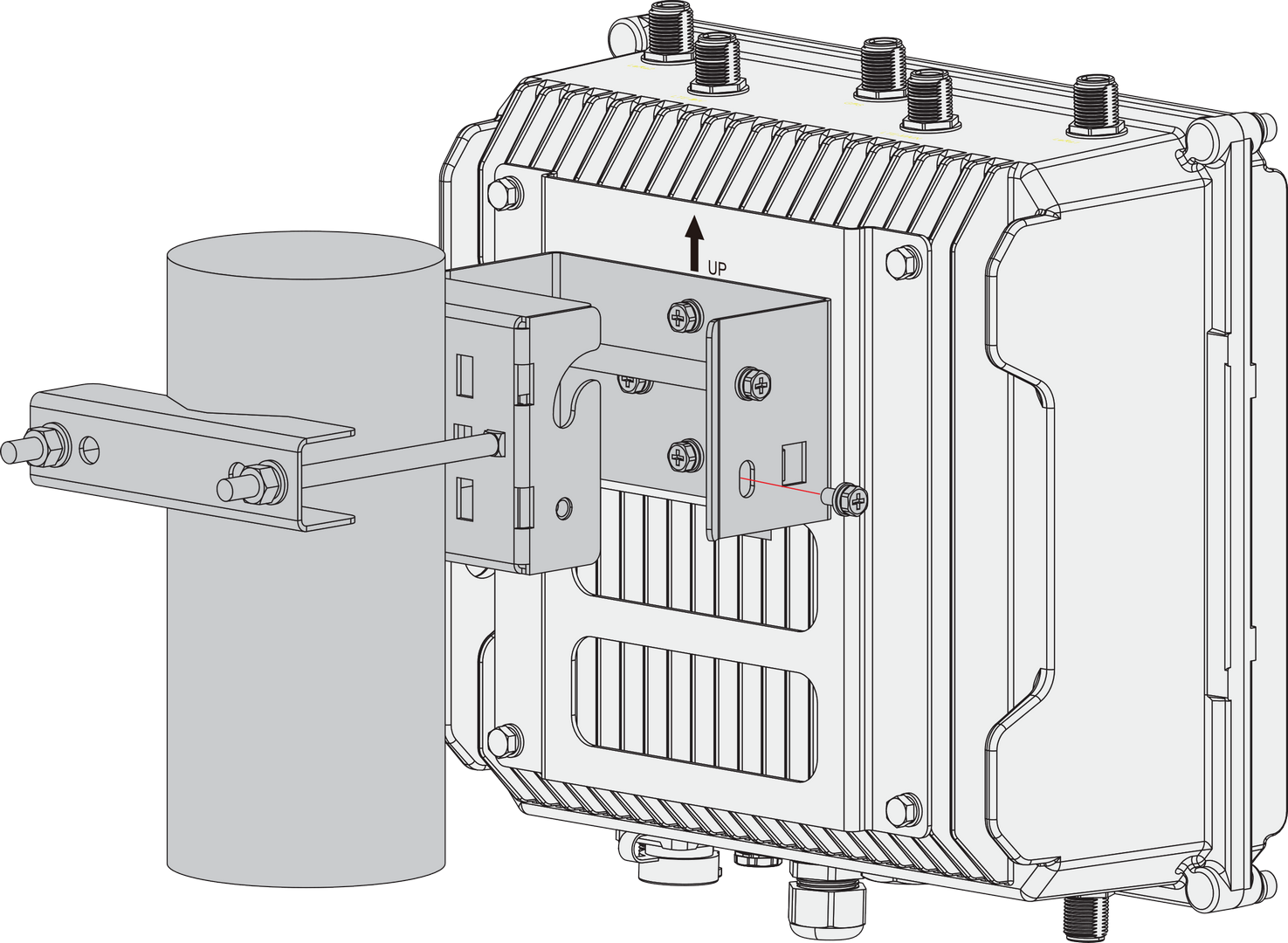 Figure 1: Fastening the enclosure to the bracket
Install Antennas and Cables
Lightning Protection
Lightning strikes can generate powerful electrical surges that may harm sensitive electronic devices. It is essential to take appropriate precautions to minimize the risk of damage. The warranty provided does not cover damages resulting from lightning strikes or other acts of nature.
To ensure optimal performance and protect your equipment from potential damage, it is strongly recommended to install proper grounding and lightning protection for:
-
All antenna connectors (GPS, Wi-Fi, LTE)
-
The ETH(PoE) port
-
The gateway enclosure
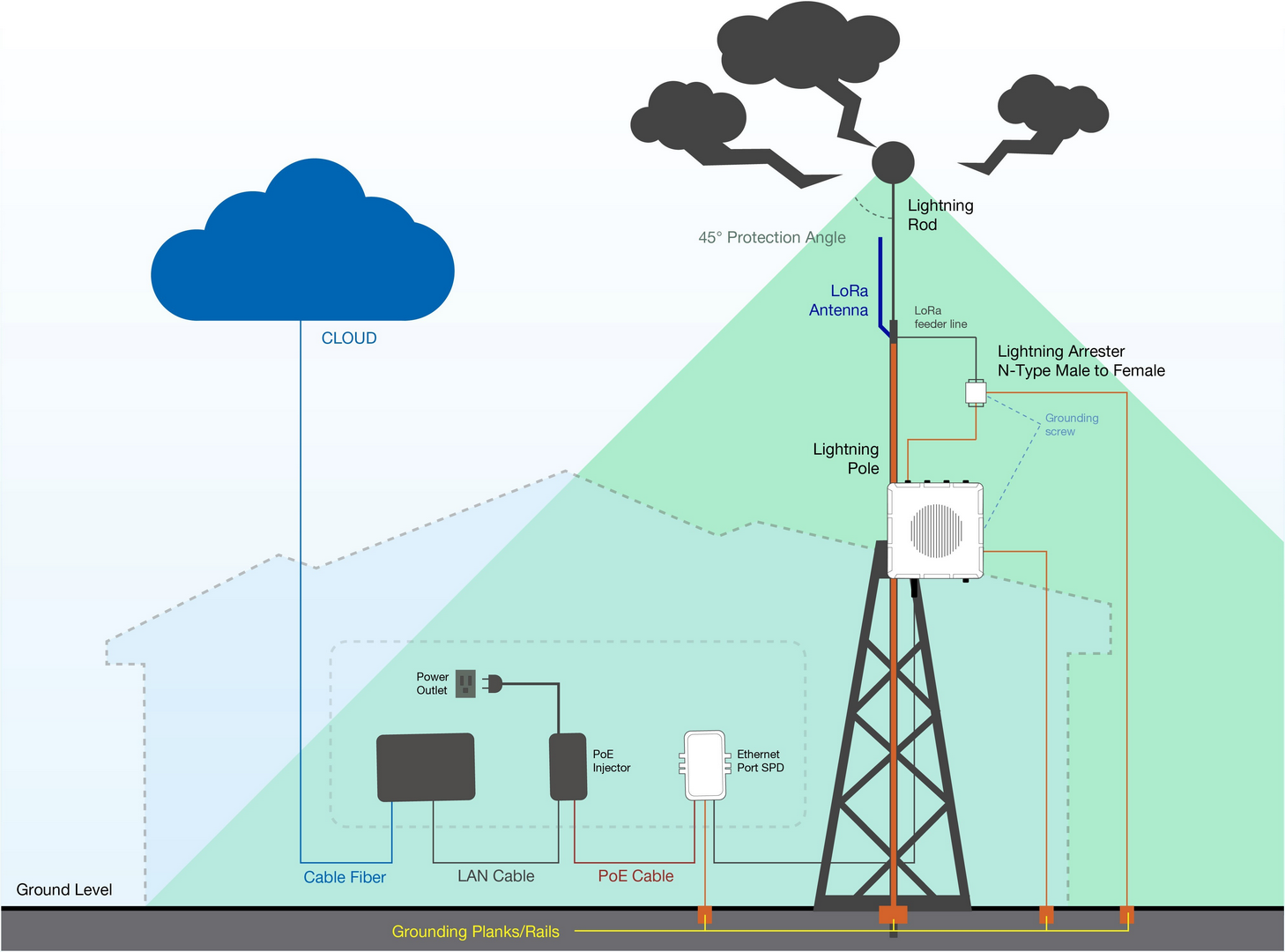 Figure 1: Full lightning protection set-up
Outdoor Surge Protection System
- Antenna Grounding: RAKwireless recommends installing a lightning arrestor on all the antenna N-type terminals. The arrestors must be N-type Female to Male to fit the antenna and enclosure connectors. Ensure you use a 10 AWG or better wire to connect the screw terminals of the arrestors to the grounding rail mounted on the building wall (grounding bar in the case of field deployment).
- Gateway Grounding: Additionally, it is recommended to use another 10 AWG or better grounding wire to connect the screw terminal on the right side of the gateway casing to the grounding rail (bar).
-
No additional protection for the Ethernet cabling is required on the gateway side. It already has a built-in surge protection system (GDT + Anti-surge resistor).
-
No additional protection is required for the LoRa antennas. The cavity diplexer integrated into the LoRa antenna ports provides surge protection for the LoRa antennas.
Indoor Surge Protection
For protecting the indoor equipment and circuitry connected to the gateway, it is recommended to install an Ethernet port SPD lightning arrestor. This device should be positioned along the cabling that connects the gateway to the PoE injector. Make sure you connect its grounding wire terminal to an appropriate building grounding point.
Should you fail to adhere to the recommendations in this document, RAKwireless carries no responsibility for any damage your equipment incurs due to a lightning strike.
Recommended Equipment
- Lightning Arrestor for GPS Antenna: This lightning arrestor connects the antenna to the GPS receiver. It is a surge protection device that secures the transceiver against transients, over-voltage, and surge currents induced by lightning bolts. By employing a high-pass filter, this product can effectively suppress low-frequency interference caused by lightning while allowing the GPS signal to pass through with low insertion loss. A transient suppression device (TVS) and a gas discharge tube (GDT) are used to protect the DC feed circuit.
- Lightning arrestor for the LTE and Wi-Fi antennas: This is a surge protection device for securing transceivers against over-voltage and surge current induced by lightning bolts. RAKwireless recommends installing lightning arrestors on all N-type antenna terminals, including LTE and 2.4G Wi-Fi antennas.
- Pulsar Cable RAK9731: RAK9731 Pulsar cable is used for RAK7285 Lightning Protection. This cable is an N-Type Male to N-Type Female cable with 1.5 m, 3 m, 5 m, 10 m, or longer custom lengths. It is an LMR-400 coaxial cable with N-type connectors.
- Signal Surge Protective Device: This surge protective device is suitable for CAT6 or Class E cables, providing protection for equipment from surges and over-voltages induced by lightning or produced in internal systems. It is widely used in comprehensive network wiring projects in offices, industries, or similar telecommunication applications, such as Gigabit Ethernet, ATM, ISDN, and VoIP systems.
- Ethernet Cabling: A CAT5 Ethernet cable is recommended for an outdoor surge protection system. It is used for connections between the PoE injector, Ethernet SPD, router/switch, and the Ethernet/PoE port on RAK7285/RAK7285C.
Connect Antennas and Cables
After completing lightning protection installation (if applied):
-
Connect the LoRa®, Wi-Fi, and GPS antennas to their respective ports. If lightning arrestors have been installed, connect the antennas through the arrestors.
-
For cellular versions, connect the LTE antennas in the same way.
-
(Optional) If using PoE for power or Ethernet for data, connect an Ethernet cable to the ETH (PoE) port.
Weather Protection
To better protect the Ethernet cable gland and the antenna connector from the weather, you need to cover them with PVC tape.
- Clean the surface area of the connector that will be wrapped. Wrap a layer of PVC tape with a 50% overlap according to the rotation direction of the connector. Continue wrapping the PVC tape to about 10 mm below the end of the connector.
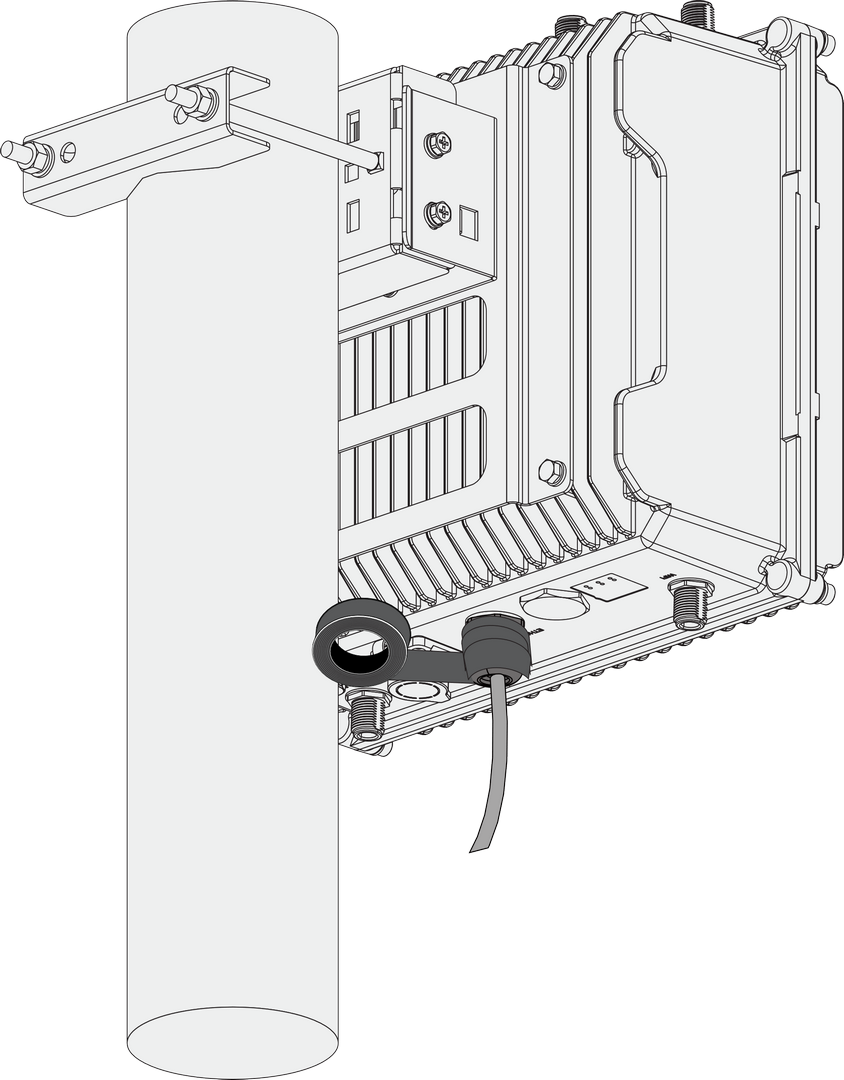 Figure 1: Wrapping with PVC tape
- Cut off about 50 cm waterproof tape. Stretch it to double its length and wrap three layers around the connector with a 50% overlap. Hold the tape in place with your hand for a few seconds.
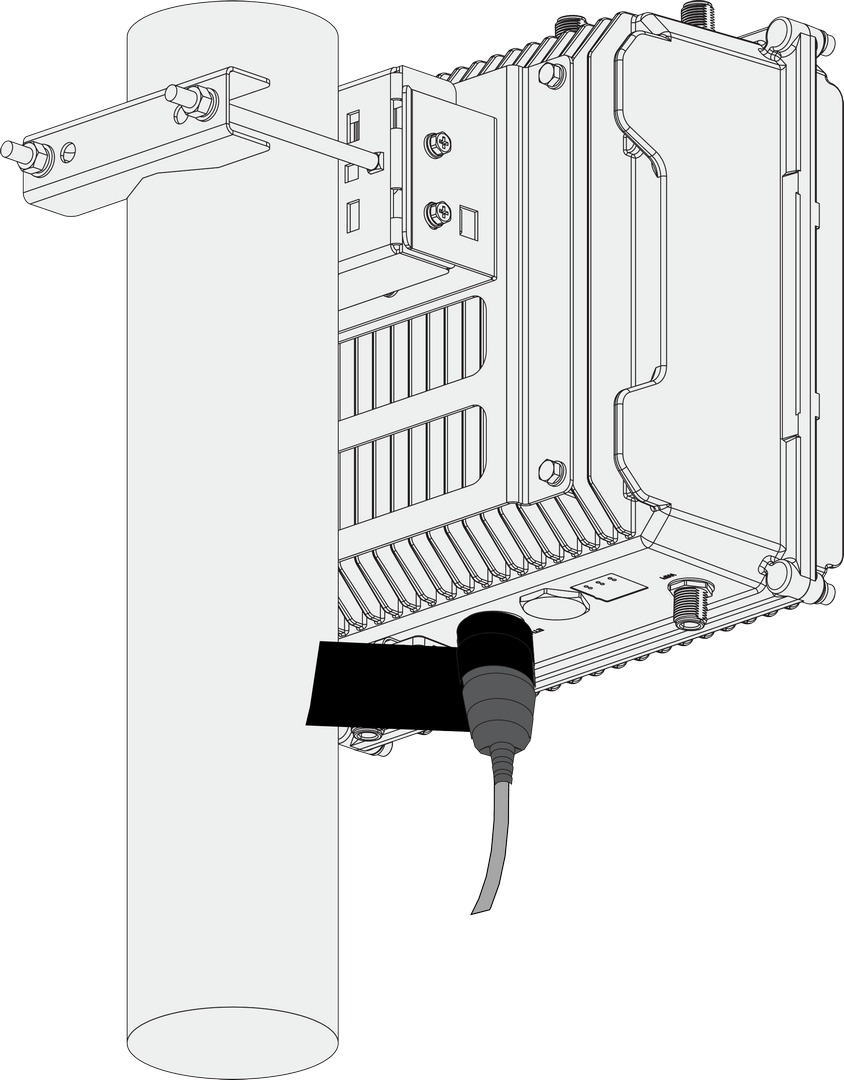 Figure 1: Wrapping with waterproof tape
- Wrap three additional layers with PVC tape with natural uncoiling force and a 50% overlap. Ensure to cover the head and the tail of the connector.
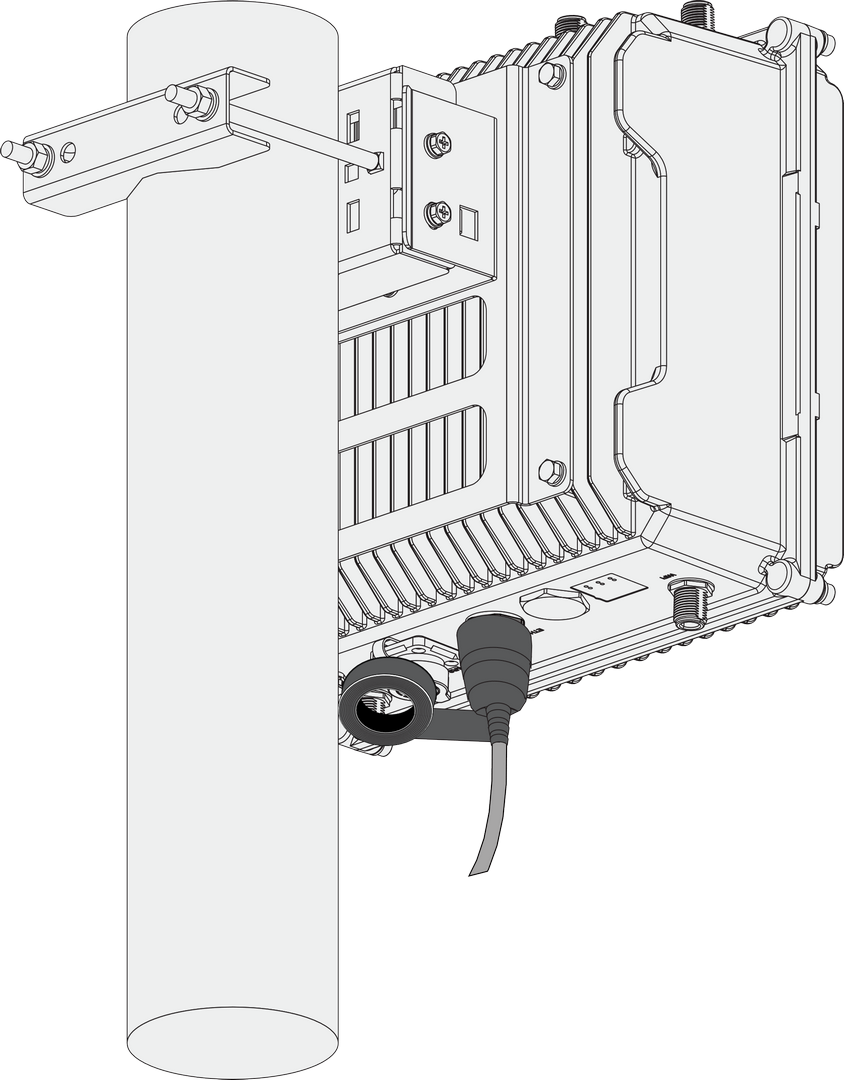 Figure 1: Final PVC wrapping
Power On the Gateway
Do not power the device if any antenna port has been left open.
The gateway supports multiple power supply options. Connect the gateway to the appropriate power source based on your requirements.
PoE (Power over Ethernet)
-
Connect the Ethernet cable—already attached to the gateway’s ETH (PoE) port—to the PoE port of the injector.
-
Plug the injector into a power outlet to power up the gateway.
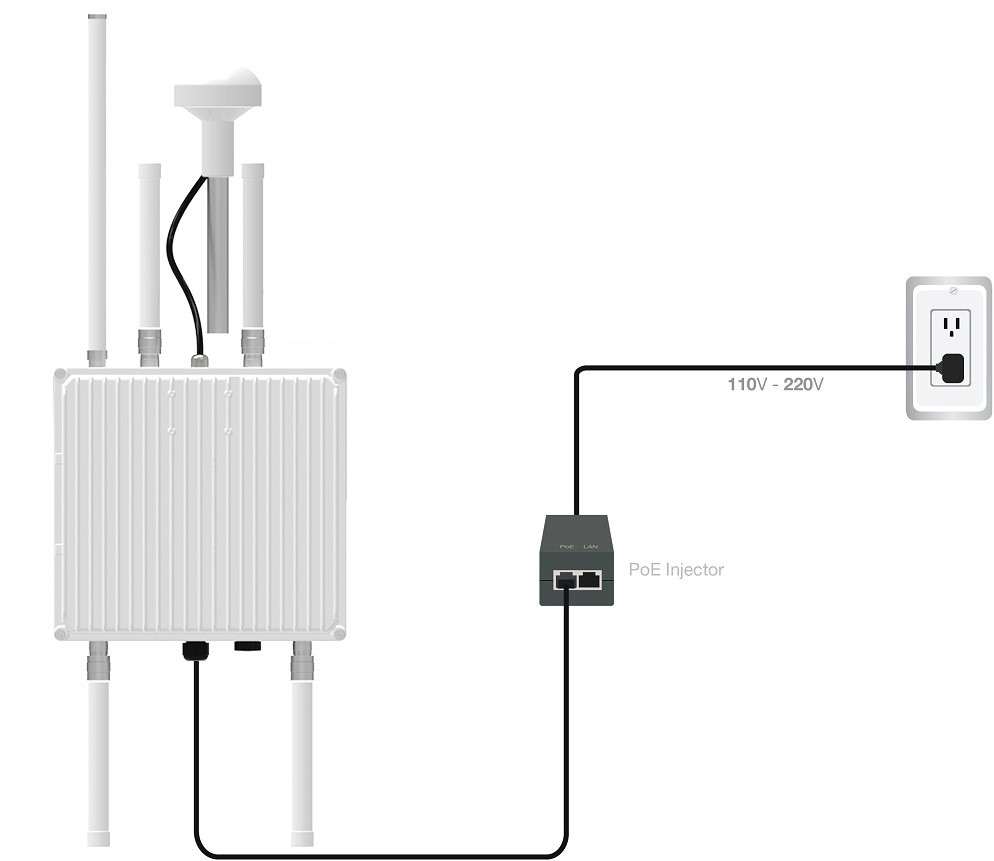 Figure 1: Powering the gateway using PoE
DC Power Input (9–36 V DC)
The gateway supports an external power supply through its DC input port. You can either use the included power cable to connect the gateway to your own 9–36 V DC power source, or power the gateway with the RAK9155 Battery Plus.
RAK9155 Battery Plus is not included in the bundle, it needs to be purchased separately.
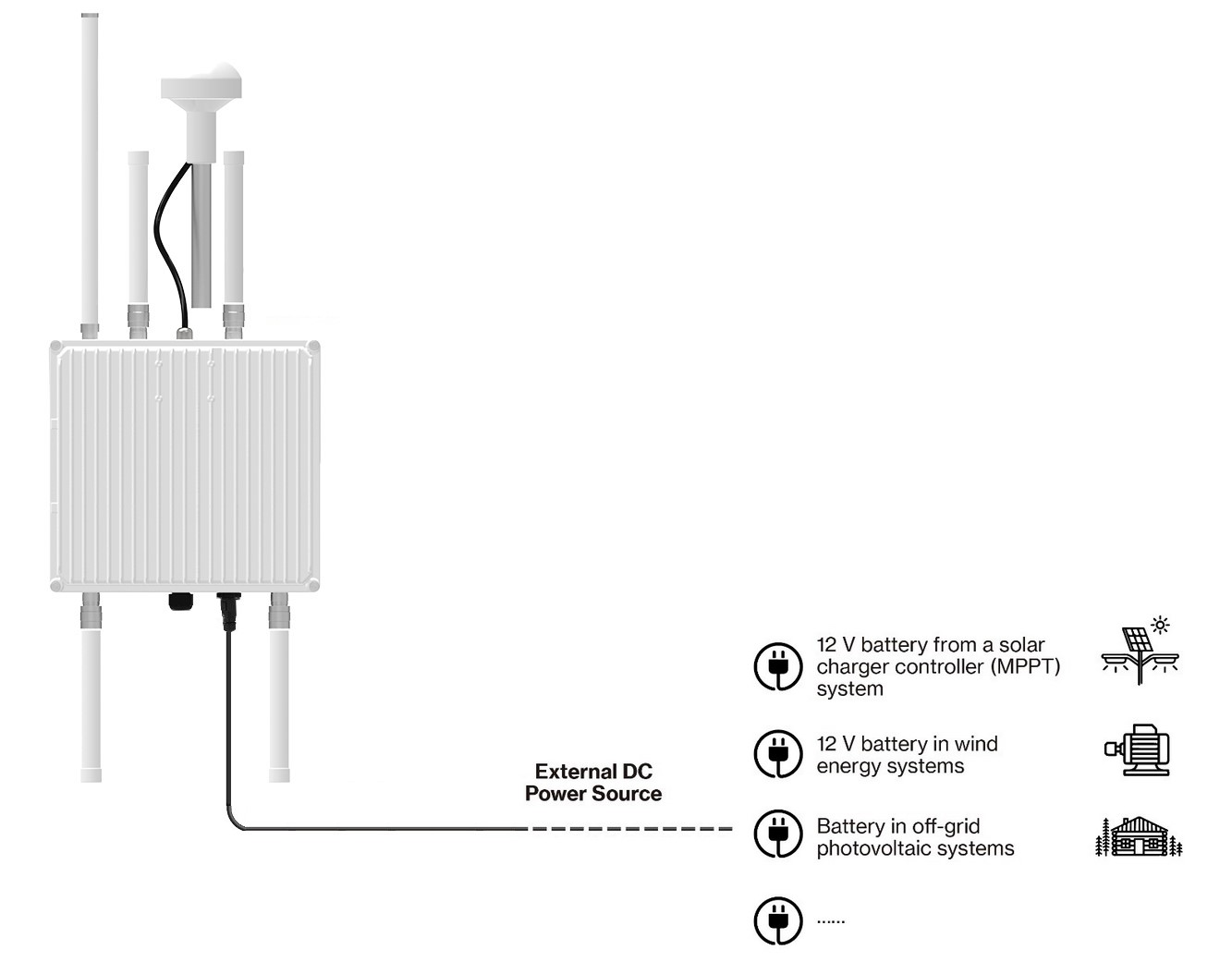 Figure 1: Powering the gateway using external DC power supply


